Invited Speakers 2026
Invited Speaker Ⅰ
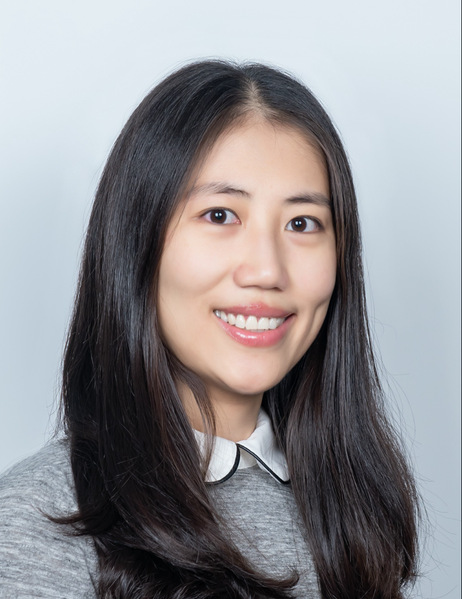
Bingjue Li
Southeast University, China
Brief Introduction: Bingjue Li, Associate Professor and Master's Supervisor, earned her Ph.D. in Mechanical and Aerospace Engineering from the University of Dayton, USA, in 2017. In the same year, she joined the School of Mechanical Engineering at Southeast University. She has led four research projects, including the National Natural Science Foundation for Young Scholars, and participated in three provincial and ministerial-level projects. Her research has been published in renowned journals such as Advanced Materials, Advanced Functional Materials, Soft Robotics, Carbon, JMD, and JMR. She delivered an invited presentation at ICMRA 2022 and has applied for or been granted six invention patents.
Speech Title: Shape-Changing Chains: From Mechanism Synthesis and Morphometrics to Bioinspired Soft Robotics
Abstract: This talk presents shape-changing chains as a common framework for shape synthesis, morphometric analysis, and soft robotic deformation. Starting from variable-geometry mechanisms, a generalized method is introduced to generate a common rigid-body chain that approximates multiple prescribed profiles. The same chain representation is then extended to morphometrics, enabling complex biological shapes to be described using compact and physically interpretable parameters. The talk further presents several bioinspired approaches to physical shape generation, including gradient-controlled bending actuators, muscle-inspired artificial muscles for pipeline robots, and a bistable wheel–leg structure. Future work will explore chain-based inverse design, dynamic modeling, and control of soft robots.
Invited Speaker Ⅱ

Zijian Zhang
Nanjing University of Aeronautics and Astronautics, China
Brief Introduction: Zijian Zhang, male, associate professor. Mainly engaged in research on magnetic elastic force sensors, and has led multiple projects such as the National Natural Science Foundation and the Provincial Key Research and Development Program. Published over 40 academic papers and authorized over 20 invention patents in T-MECH, TIM, and other institutions. Received awards such as the second prize (ranked first) of the Science and Technology Award from the Jiangsu Society of Aeronautics and Astronautics. Received honors such as the Jiangsu Youth May Fourth Medal Collective.
Invited Speaker Ⅲ

Wenhui Wu
Shenzhen University, China
Brief Introduction: Wenhui Wu is an Associate Professor and Doctoral Supervisor at the College of Electronic and Information Engineering, Shenzhen University. She received her Ph.D. from City University of Hong Kong in 2019. Since 2020, she has been teaching in the Department of Electronic Engineering, College of Electronic and Information Engineering, Shenzhen University. In 2021, she was recognized as a Shenzhen Overseas High-Level Talent. Her research focuses on machine learning, graph data analysis, and image enhancement. She has led several research projects, including projects funded by the National Natural Science Foundation of China (NSFC) and provincial/municipal natural science foundations.
Speech Title: Revisiting Physical Model Based Deep Learning Framework For Degenerated Image Enhancement
Abstract: Images captured in low-light or underwater environments are subject to limitations imposed by both the objective imaging conditions and the acquisition devices, often suffering from degradations such as low contrast, extremely poor visibility, noise, or blur, which severely compromise the visual quality. Traditional methods, grounded in the principles of image formation, have proposed a series of enhancement techniques based on imaging models, offering strong interpretability. However, they rely heavily on prior knowledge and assumptions, which not only introduces high computational complexity for optimization but also leads to poor generalization performance across diverse scenarios. In recent years, the integration of imaging models with deep learning techniques has demonstrated promising performance in enhancing various types of degraded images, while also offering certain advantages in interpretability. This report reviews the main challenges faced by current imaging-model-based deep learning approaches for low-light and underwater image enhancement, and presents the research achievements of our team over the past few years.
Invited Speaker Ⅳ
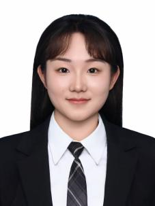
Mengxin Wang
Harbin Institute of Technology, Weihai, China
Brief Introduction: Mengxin Wang is an Associate Professor and Master's Supervisor at the School of Science, Harbin Institute of Technology, Weihai. She was selected for the 2025 Macao Young Scholars Program and is among the first cohort of the "Chunyan Talents Program" of Harbin Institute of Technology, Weihai. She received her Ph.D. degree from the School of Mathematics, Harbin Institute of Technology, in 2024, and was a visiting Ph.D. student at Nanyang Technological University, Singapore, from December 2022 to December 2023. Since October 2024, she has been a postdoctoral researcher at the School of Computer Science and Technology, Harbin Institute of Technology.
Her research interests include distributed optimization for multi-agent systems and noncooperative games. Her research has been published in leading international journals, including Automatica and IEEE Transactions. She has led six research projects, including the National Natural Science Foundation of China, the Natural Science Foundation of Shandong Province.
Speech Title: Distributed Neurodynamic Methods for Noncooperative Games with Complex Constraints
Abstract: This talk presents neurodynamic methods for generalized Nash equilibrium seeking in noncooperative games with private and shared constraints. Under full-decision information, adaptive penalty dynamics are developed to enforce feasibility without requiring prior knowledge of exact penalty parameters. Convergence is established under strong, generalized strong, and standard monotonicity conditions. Under partial-decision information, the framework is extended to distributed aggregative games by combining adaptive penalties, primal–dual dynamics, and consensus-based estimation. A dynamic event-triggered mechanism is further introduced to reduce communication while preserving convergence and excluding Zeno behavior. Applications to 5G base-station deployment and Nash–Cournot competition illustrate the effectiveness of the proposed methods.
Invited Speaker Ⅴ
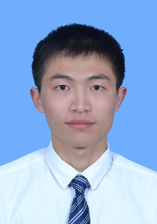
Yongwei Zhang
South China Agricultural University, China
Brief Introduction: Yongwei Zhang received the Ph.D. degree in control science and engineering from the School of Automation, Guangdong University of Technology, Guangzhou, China, in 2021. He was a Post-Doctoral Fellow with the School of Automation, Guangdong University of Technology, from 2021 to 2023. He is currently an Associate Professor with the College of Mathematics and Informatics, South China Agricultural University, Guangzhou, China. His current research interests include adaptive dynamic programming, reinforcement learning, unmanned autonomous systems, and smart agriculture. He has published more than 20 research papers and has been authorized 2 patents. He has received the IEEE Computational Intelligence Society Graduate Student Research Grants and the Best Paper Award at the 2022 IEEE 11th Data-Driven Control and Learning Systems Conference. He is an IEEE Member, a member of the Chinese Association of Automation (CAA), and the assistant secretary general of the CAA Technical Committee on Adaptive Dynamic Programming and Reinforcement Learning.
Speech Title: Game-Based Self-Learning Optimal Control for Unmanned Systems
Abstract: With the rapid development of artificial intelligence and autonomous swarm technologies, unmanned systems have been extensively deployed in a wide range of fields, including military confrontation, emergency rescue, and smart agriculture. When operating in complex and dynamically interactive environments, unmanned systems inevitably suffer from collaborative conflicts, resource competition, and dynamic confrontations. Conventional control approaches are unable to characterize the interactive couplings among individual agents, and thus cannot satisfy the autonomous control requirements under game-theoretic scenarios. Integrating game theory, reinforcement learning, and optimal control, game-based self-learning optimal control is capable of modeling diverse agent interactions such as cooperation, competition, and confrontation. By deriving Nash equilibrium solutions to attain optimal control policies, this method can guarantee system stability while simultaneously optimizing overall control performance. This report first elaborates the research background of unmanned systems and the fundamental theoretical framework of game-based self-learning optimal control. Subsequently, the applications of the game-based self-learning optimal control method are investigated across typical unmanned systems, including wheeled robots, agricultural vehicles, and unmanned surface vehicles.
Invited Speaker Ⅵ
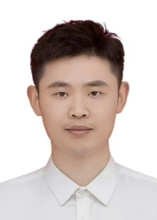
Xuan Li
Beijing Institute of Technology, Zhuhai, China
Brief Introduction: Xuan Li is an Associate Professor and Ph.D. Supervisor at Beijing Institute of Technology, Zhuhai. His research interests include large model-driven Scenario Engineering, perception and planning for intelligent autonomous systems, and intelligent multi-domain collaborative systems. He has published more than 50 papers in leading international journals and conferences, including over 20 SCI-indexed papers as the first or corresponding author in prestigious IEEE Transactions and other top-tier journals. Among these publications, five have been recognized as Highly Cited Papers or Hot Papers. He has also been granted six Chinese invention patents.
Speech Title: Heterogeneous Collaborative Technologies for Complex Environments